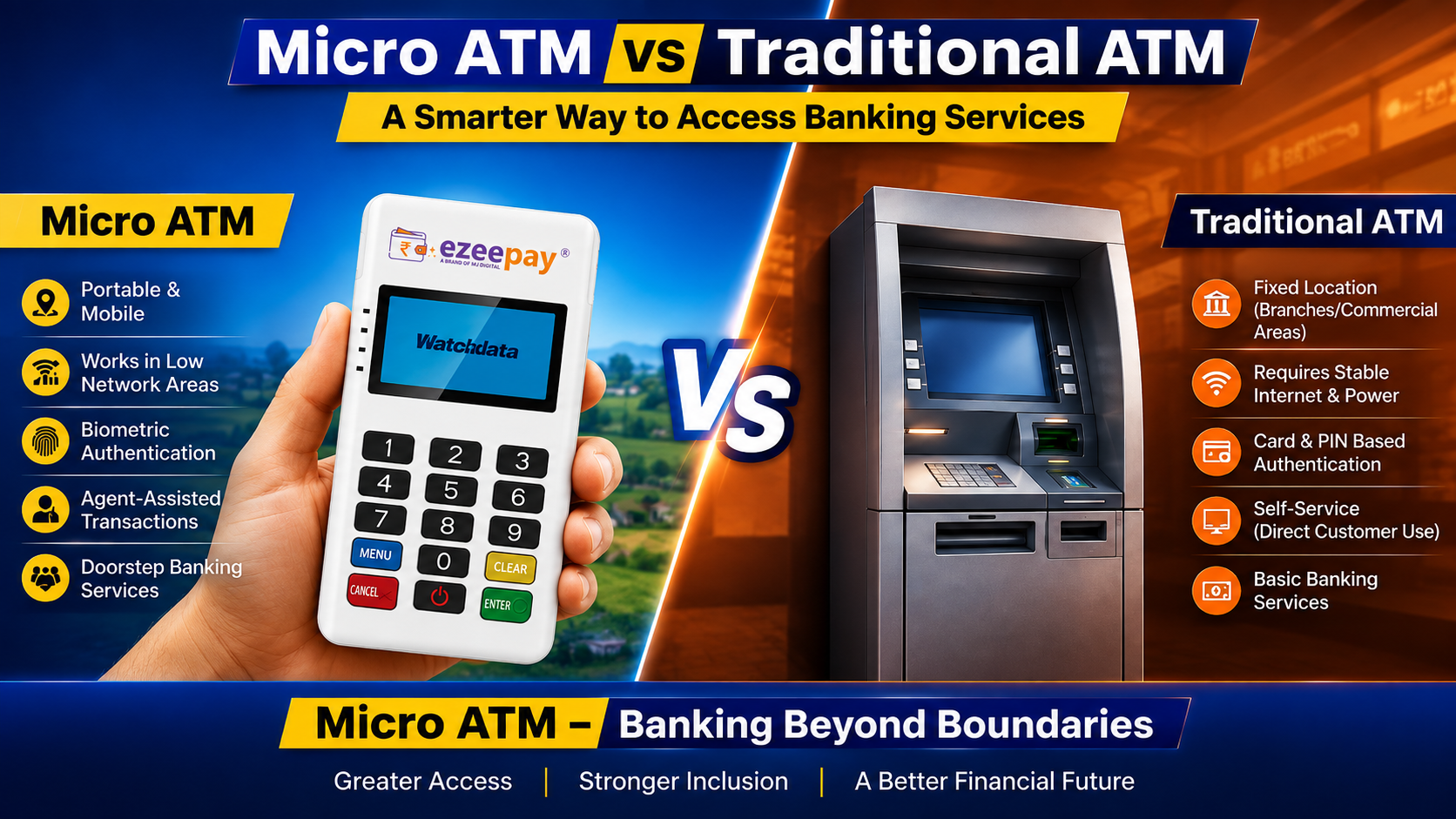
Micro ATM Machine vs. Traditional ATMs: What Sets Them Apart?
Banking services have greatly improved thanks to technology in recent decades. One significant invention that has changed the financial landscape is the Micro ATM machine. These devices are real game-changers because they bring banking services to people who couldn’t access them before. Micro ATMs are easier to use, more convenient, and safer compared to regular bank ATMs. This article will compare Micro ATMs to traditional ATMs and show how both contribute to the future of banking services.
Micro ATM Machine: What Are They?
Micro ATMs are small and portable devices that can perform the same financial activities as regular ATMs. What sets them apart is their mobility and ability to work in areas with limited infrastructure. This makes them particularly valuable in rural and remote areas where installing full-sized ATMs might not be practical or cost-effective. Micro ATM machines play a crucial role in providing convenient financial services to these underserved regions.
Based on the Aadhaar Enabled Payment System (AePS), these devices enable users to log into their financial accounts using their Aadhaar number and a biometric authentication method like fingerprint scanning. Bank Mitras or Customer Service Points (CSPs) act as the middlemen between customers and financial institutions using micro-ATMs.
Common Bank Machines: ATMs
ATMs (Automated Teller Machines) offer a range of convenient services for banking customers. You can do various transactions like making deposits, withdrawing money, checking your account balance, and printing mini statements at an ATM. Bank account holders typically get a set quota of free monthly withdrawals (usually 5 free withdrawals from their own bank ATMs, and 3 to 5 free transactions from other bank ATMs depending on whether they are in metro or non-metro locations). This structure aims to enhance the user experience and make transactions smoother for account holders.
What sets apart a Micro ATM machine from a standard one?
Accessibility and Reach:
The most notable difference between Micro ATMs and traditional bank-installed ATMs lies in their accessibility and reach. While traditional ATMs are typically located within bank branches or at specific commercial locations, Micro ATMs are designed to be mobile and portable. These handheld devices enable banking services to be brought directly to remote and underserved areas, where establishing a physical bank branch or full-sized ATM might not be feasible.
Connectivity and Technology:
Traditional ATMs primarily rely on a stable internet connection and heavy power infrastructure to facilitate transactions. In contrast, Micro ATMs are equipped with multiple connectivity options, such as GPRS, 3G, and 4G networks, enabling them to function efficiently even in areas with limited or intermittent internet connectivity. This adaptability makes Micro ATMs ideal for serving customers in rural and semi-urban regions, where network infrastructure might be less robust.
Biometric Authentication:
Micro ATMs are equipped with biometric authentication capabilities, which allow customers to perform transactions using their fingerprints or other biometric data. This feature enhances security and ensures that transactions are conducted safely, reducing the risks associated with card-based transactions, such as theft, lost cards, and PIN fraud.
Agent-Assisted Transactions:
Unlike traditional ATMs, where customers interact directly with the self-service machine, Micro ATMs involve agent-assisted transactions. Local business correspondents or banking agents are responsible for operating Micro ATMs and assisting customers with their transactions. This human touch provides a personalized banking experience and helps users who may not be well-versed with technology to comfortably access banking services.
Service Offerings:
While traditional ATMs primarily offer cash withdrawal and balance inquiry services, Micro ATMs provide a broader range of door-step banking services. These services include cash deposits, fund transfers, bill payments, and even account opening assistance. This versatility makes Micro ATMs a valuable tool for promoting financial inclusion and providing essential banking services to unbanked or underbanked populations.
Conclusion
Micro ATMs are a notable departure from conventional bank-installed ATMs in terms of accessibility, connectivity, technology, authentication, and service offerings. Their mobility, agent-assisted transactions, and biometric authentication features have revolutionized the delivery of banking services, particularly in remote and underserved areas. By bridging the gap between traditional banking infrastructure and unbanked communities, Micro ATMs have a vital role in expanding financial inclusion and promoting economic growth. With the continuous advancement of technology, we can anticipate that Micro ATMs will have an even more significant impact on the future of banking and financial services. If interested, you can also partner with us to become a micro ATM service provider.